
'Clients deemed higher-risk are required to update their KYC more frequently.'

Tata Motors, Maruti, Tata Steel, Vedanta, Bajaj Auto, IndusInd Bank, SBI, Hero MotoCorp, M&M, Asian Paints, Axis Bank, RIL and L&T too jumped up to 10.21 per cent.

Mukesh Ambani is stringing in new partnerships within the Reliance ecosystem with the best in global business -- from Facebook, Google and Microsoft to umpteen sovereign wealth funds and a soon-to-be-declared strategic partner in a big global retailer, notes Shailesh Dobhal.

Priyadarshini Maji evaluates the impact that payment banks are likely to have on your financial life.

A 40-year-old freelance journalist has claimed a person 'hypnotised' him over the phone and duped him of Rs 40,000, but police and experts said this is one of the 'most normal kinds of cyber fraud' and not a case of hypnosis.

Break the chains of debt, invest in your future, and wave the flag of financial independence high. Freedom awaits, comrades. Let's conquer this battlefield together this Republic day, exhorts Vatsal Ramaiya.

HDFC Bank on Monday said it aims to regain the two per cent market share in the credit card market it ceded to rivals during a recent ban, within a year by aggressively tapping into its existing depositor base. The bank will also focus on forging new partnerships to sell more cards and will not deviate from its conservative approach on taking credit risks as it goes aggressive in the market, its group head for payments and consumer finance, digital banking and IT, Parag Rao, told reporters. On August 17, RBI lifted the ban on HDFC Bank which had prevented it from issuing new credit cards from December 2020.

'Given that the market is now demanding disciplined growth, well-run companies should be able to demonstrate profitability with the cash on hand.'

Currently, only three have completed more than six months of operation in the space - Fino Payments Bank, Airtel Payments Bank and Paytm

It will carry out most banking operations like accepting deposits but can't advance loans or issue credit cards.

With funds from SoftBank, Delhivery plans to rapidly scale up its reach from 15,000 pin codes to 20,000 by the June quarter of 2019-20.
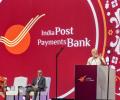
Key questions remain about the operational and financial viability of a completely paperless bank such as India Post, says Mayank Jain.

The Indian Post Payments Bank will be a boon to Indians who live in rural areas. India has 154,000 post offices, of which 139,000 are rural.

Regulators will need to allow the model to evolve to allow profits to flow, says Una Gulani.


Don't recharge your phone at public outlets -- carry a power bank instead. Avoid clicking on links sent by 'friends'. If you get into an online sexual encounter with a stranger and get blackmailed, refuse to pay up.

In conversation with Deepsekhar Choudhury and Neha Alawadhi, Sharma speaks about his journey and the road ahead.

For the startup ecosystem in India, the scorecard so far has been a mixed bag, observes Akhil Gupta.
PhonePe said on Tuesday it has launched a service that will allow the fintech firm's Indian users traveling abroad to pay foreign merchants using Unified Payments Interface (UPI). 'UPI international' supports merchant outlets in UAE, Singapore, Mauritius, Nepal and Bhutan that have a local QR (quick response) code. Users will be able to make direct payments in a foreign currency from their Indian bank, like they do with international debit cards.

Vodafone Idea, the promoter of Aditya Bira Idea Payments Bank, said in a notification to the exchanges late on Friday that the board of the bank approved winding up the business, subject to approval from the Reserve Bank of India.

IPO-bound mobility platform Ola, said it has successfully raised $500 million via a Term Loan B (TLB) from marquee international institutional investors. This term loan has no impact on the valuation of Bhavish Aggarwal-led Ola. The Bengaluru-based firm recently raised $139 million. This is part of a $1 billion funding round for which the company is in talks with investors, increasing its valuation to about $7.5 billion, according to the sources.
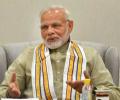
The Department of Posts was one of the 11 entities to get the in-principle nod from the Reserve Bank of India in 2015 for setting up a payments bank.

Deteriorating ties between India and Canada could have a bearing on flows into the domestic capital markets. At present, Canada is the seventh largest country for foreign portfolio investor (FPI) flows into India. According to the National Securities Depository Ltd (NSDL), the assets under custody (AUC) of FPIs domiciled in Canada stood at nearly Rs 1.8 trillion ($21 billion) at the end of August. Almost 85 per cent of these investments are in listed equity, while the remaining in debt and hybrid instruments.

Adani Enterprises' proposed Rs 20,000 crore (Rs 200 billion) fundraising via fresh issue of equity shares through a public offer would be the fourth biggest by Indian companies, excluding banks and non-banking financial companies.

Since the beginning of 2020, i-bankers have collected nearly Rs 1,800 crore by way of IPO fees. Interestingly, the India fees this year form just 1 per cent of the global fee pool of $13.7 billion from IPOs.

Of the total 53,334 cases of frauds reported during 2008-09 and 2018-19 fiscal years, involving a whopping Rs 2.05 lakh crore, a highest of 6,811 cases were reported by the ICICI Bank.

Opposition leaders on Thursday observed a 'Black Day' in Parliament premises to mark one month of the announcement of demonetisation, with Rahul Gandhi launching a scathing attack on Prime Minister Narendra Modi, saying his "foolish decision" has "devastated" the country.

Funding winter and corporate governance woes separated the men from the boys in the country's startup space in 2023 that saw funds into the segment tapering to just around $8 billion. All said, investors are hopeful of strong growth of the maturing startup ecosystem in the new year. Edtech and health tech segments that grew exponentially during the pandemic plunged into an abyss of financial uncertainties, with several firms shuttering their business, and valuation of prominent players like BYJU'S and PharmEasy plummeting 85-90 per cent.

Walmart-owned fintech firm PhonePe said it has crossed 500 million lifetime registered users on its platform. With this milestone, 1 in 3 Indians are now on PhonePe. The company said it is the first Indian internet company to have reached this scale globally. This milestone has been achieved in just over 7 years since the PhonePe UPI (Unified Payments Interface) payments launched in August 2016.

Whether it was the MGNREGS or the NFSA or the Aadhaar-based DBT scheme for cash transfer, the Modi government has built on the basic architecture created by the Singh government. Policy makers in the Modi government, instead of discarding them as products of the previous political regime, worked on them, expanded their scope and reach, and used new tools to improve their performance, explains A K Bhattacharya.

The Securities and Exchange Board of India (Sebi) has cleared the draft red herring prospectus (DRHP) of the state-owned Life Insurance Corporation of India (LIC). According to investment banking sources, the so-called final observations were issued by the market regulator on Tuesday evening. Following the market regulator's nod to the IPO papers, the insurer can launch its share sale. However, LIC may not launch its IPO immediately given the current volatile market conditions.

ICICI Bank says it blocked all UPI transactions made through PhonePe due to security concerns.

WhatsApp on Wednesday announced the expansion of its payments service in India to make it easier for people transacting with businesses to pay for purchases directly in the chat, with a choice of UPI apps, including rival digital payment options, as well as credit and debit cards. Meta founder and CEO Mark Zuckerberg asserted that India is leading the world in people and businesses embracing messaging. WhatsApp said it is working with partners Razorpay and PayU "to make paying for something as simple as sending a message", as the Meta-owned platform unveiled a host of new features to woo businesses in India's booming commerce market.

Analysts believe that investors should look at stocks that hit 52-week lows only if they have a dividend paying track record, are debt-free and have sound fundamentals.

Foreign investment in India's start-ups has plummeted 72 per cent to $4.58 billion so far, from $16.2 billion during the same period last year.

'Indices will remain range bound in 2022 as earnings catch up with the current multiples.'

While a wallet is convenient, payments bank offers interest on deposits and ATM facility.

The sharp rally in the broader markets has propelled India's market capitalisation (m-cap) to a new high. The combined m-cap of all BSE-listed firms rose to Rs 291.9 trillion in intraday trade on Thursday before settling lower at Rs 290.9 trillion. The previous record was on December 14, 2022, at Rs 291.3 trillion.

Fintech giant Paytm claimed it is selling more FASTags than all the banks put together on a daily basis.

Fintech unicorn Razorpay has raised $375 million in the Series F round of funding at a $7.5-billion valuation, making it India's second-most valuable start-up in this space, after Paytm. The company valuation has surged over seven times in 15 months, helping it push Walmart-owned digital payments firm PhonePe to the third spot on the country's most-valuable fintech list. Razorpay's latest round of fundraising was led by Lone Pine Capital, Alkeon Capital, and TCV.
 © 2026 Rediff.com - Advertise with us - Disclaimer - Privacy Policy - Sitemap - Feedback - About us - Terms of use - Grievances